الأنواع والتشخيص بالديناميكا البولية والعلاج من تمارين قاع الحوض إلى الجراحة
It depends on the type, which is why urodynamic testing to identify the exact cause matters before choosing treatment. Pelvic floor (Kegel) exercises improve stress incontinence in 60-70% of mild-to-moderate cases within 3 months. Overactive bladder responds to medications like anticholinergics or beta-3 agonists, or to Botox injections (70-80% success) if medication isn't enough. Stress incontinence that doesn't respond to exercises is treated surgically with a mid-urethral sling, achieving 85-90% success rates.
Many mild-to-moderate cases improve substantially with pelvic floor exercises alone — 60-70% within 3 months when performed correctly. Surgery (a mid-urethral sling) is considered when conservative treatment isn't enough for stress incontinence, and achieves 85-90% success rates. For overactive bladder that doesn't respond to medication, Botox or sacral neuromodulation are next-step options before considering surgery. This stepped pathway — conservative care first, surgery reserved for cases that don't respond — follows the EAU Guidelines on Non-neurogenic Female LUTS (2024) and the AUA/SUFU Guideline on the Surgical Management of Stress Urinary Incontinence.
Stress incontinence (leakage with cough/sneeze/exercise), urge incontinence (sudden strong urge — overactive bladder), mixed incontinence (both types), overflow incontinence (from incomplete bladder emptying), and functional incontinence (inability to reach toilet in time).
Pregnancy and vaginal delivery damage pelvic floor muscles. Menopause reduces estrogen, weakening urethral support. Other causes: obesity, chronic cough, constipation, pelvic organ prolapse, previous pelvic surgery, and neurological conditions.
Urodynamics measures bladder function, pressure, and urine flow. It includes cystometry, uroflowmetry, urethral pressure profiles, and EMG. It identifies the exact type of incontinence, ensuring the right treatment is chosen — essential before any surgery.
Kegel exercises strengthen pelvic floor muscles supporting the urethra. When performed correctly (3 sets of 10-15 contractions daily), they improve stress incontinence in 60-70% of mild-moderate cases within 3 months. Physiotherapy guidance improves results.
Anticholinergics (oxybutynin, solifenacin, tolterodine) reduce bladder contractions. Beta-3 agonists (mirabegron) relax the bladder with fewer side effects. Topical vaginal estrogen helps menopausal women. Combination therapy is often used.
Have more questions? Book a consultation with Dr. Samer Morsy
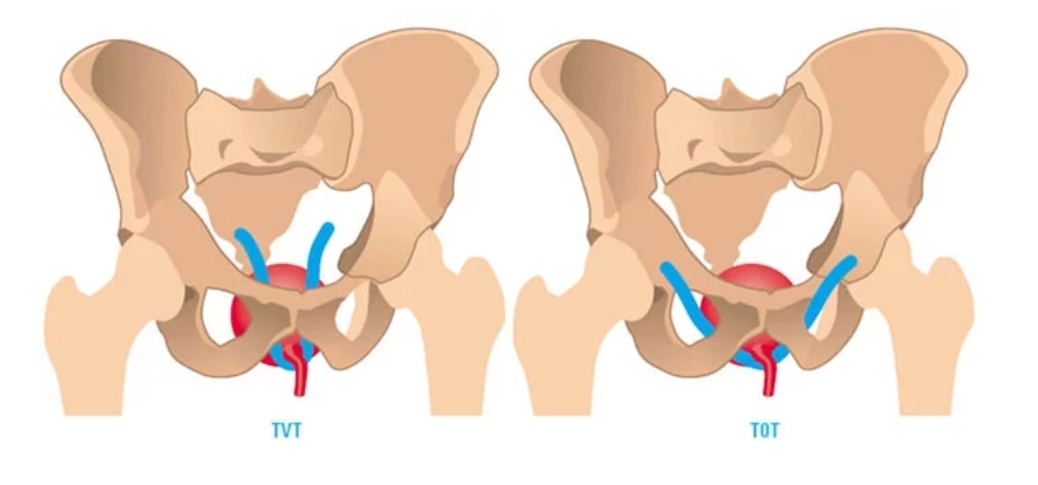
💬 WhatsApp Dr. MorsyMid-urethral sling (MUS) places a mesh tape under the urethra for support. TVT and TOT slings achieve 85-90% success rates. Burch colposuspension is a laparoscopic alternative. Urethral bulking agents are a less invasive option.
Botulinum toxin A (Botox) injected into the bladder wall reduces overactive contractions. 100-200 units are injected through a cystoscope under local anesthesia. Effects last 6-12 months then repeat injection is needed. Success rate 70-80% for urge incontinence.
Sacral neuromodulation (InterStim) implants a device near the sacral nerves to regulate bladder nerve signals. It treats refractory overactive bladder, urge incontinence, and non-obstructive retention. A test phase determines suitability before permanent implant.
Reduce caffeine and alcohol (both irritate the bladder). Maintain healthy weight — every 5 kg lost reduces incontinence by 50%. Manage constipation. Timed voiding every 2-3 hours. Bladder training gradually increases intervals between toilet visits.
Seek help when incontinence affects daily activities or sleep, when you use more than 1 pad daily, when blood appears in urine, or when recurrent UTIs occur. Incontinence is NOT a normal part of aging — effective treatments exist at every stage.
Ready to take the next step? Book your appointment today
📅 Book Appointment