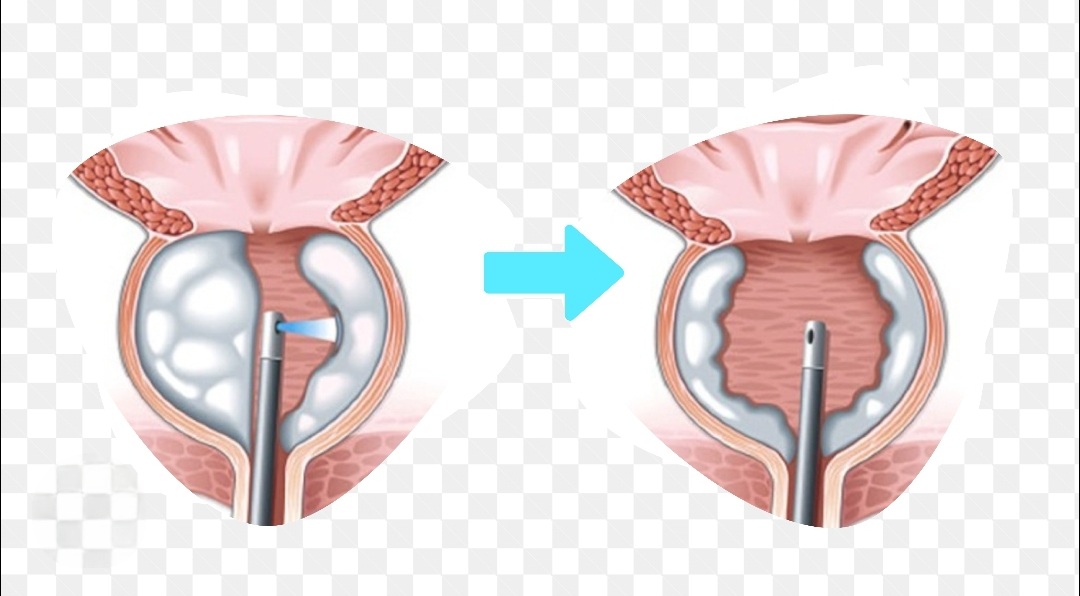
Understanding enlarged prostate — symptoms, treatments, and surgical options including HoLEP and ThuLEP
There is no single "best" treatment for every patient — the right choice depends on prostate size, symptom severity, and the patient's overall health. For larger prostates (over 80–100 g), laser enucleation (HoLEP or ThuLEP) is currently the preferred option, since it removes the entire obstructing tissue with less bleeding and faster recovery than traditional TURP surgery. For mild-to-moderate symptoms, medication or minimally invasive options like Rezūm may be enough, and only imaging plus a clinical exam can confirm which category a patient falls into.
Medication usually suits mild-to-moderate symptoms or a smaller prostate. Alpha-blockers such as tamsulosin relax the prostate muscle and improve flow within days, while 5-alpha reductase inhibitors gradually shrink the gland over months. If symptoms don't improve on medication, worsen over time, or urinary retention develops, surgery becomes the next step rather than continuing an ineffective drug regimen.
Laser surgery (HoLEP/ThuLEP) is the best option when medication fails, or when there's urinary retention, recurrent blood in the urine, kidney impact, or a very large prostate. Unlike traditional surgery, this technique suits nearly any prostate size — including very large glands exceeding 150–200 g — and typically allows same-day or next-day hospital discharge with the catheter removed within 24–48 hours.
Laser techniques cause significantly less bleeding, making them safe even for patients on blood thinners who would otherwise need to stop medication before surgery. They also remove the enlarged tissue completely rather than partially, which lowers the chance of symptoms returning and cuts retreatment rates well below those reported after traditional TURP. This aligns with the AUA Guideline on the Surgical Management of BPH (2020, amended 2023) and the EAU Guidelines on Non-neurogenic Male LUTS (2024), both of which recommend laser enucleation for prostates of any size on the basis of its lower retreatment rate and reduced bleeding risk.
The right technique — HoLEP, ThuLEP, BipoLEP, or Rezūm — depends on the clinical exam, prostate size measured by ultrasound, and symptom severity on the IPSS questionnaire. Dr. Samer Morsy discusses these factors with each patient after examination to choose the option best suited to their case and health goals.
Laser surgery typically costs slightly more upfront than traditional TURP because of the equipment involved, but the shorter hospital stay, faster recovery, and lower retreatment rate often make it more cost-effective over the long run. Exact pricing is discussed in detail during the first consultation.
BPH is non-cancerous enlargement of the prostate gland affecting men over 50. The growing prostate compresses the urethra, obstructing urine flow. By age 70, over 70% of men have BPH to some degree.
Weak stream, nocturia, hesitancy, incomplete emptying, urgency, and in severe cases urinary retention requiring catheterization. Severity is scored with the IPSS questionnaire.
Seek help if symptoms affect sleep or daily life, if you notice blood in urine, pain urinating, complete urinary retention, or recurrent UTIs. Early treatment prevents bladder damage and kidney problems.
Digital rectal exam, PSA blood test, uroflowmetry, post-void residual ultrasound, and sometimes urodynamic studies. Prostate size is measured by transrectal or abdominal ultrasound.
Alpha-blockers (tamsulosin, alfuzosin) relax prostate muscle for quick relief. 5-alpha reductase inhibitors shrink the gland over months. Tadalafil treats BPH and erectile dysfunction simultaneously.
Have more questions? Book a consultation with Dr. Samer Morsy
💬 WhatsApp Dr. MorsyLaser enucleation (HoLEP/ThuLEP/BipolLEP) removes the entire obstructing adenoma. TURP is the traditional gold standard. Minimally invasive: Rezum and UroLift for smaller prostates.
Laser enucleation has lower bleeding risk, 1-2 day hospital stay, faster recovery, and far lower retreatment rates. Considered superior to TURP for medium and large prostates.
Most patients go home in 24-48 hours with a catheter removed within 1-2 days. Temporary urgency or mild leakage can occur for 2-6 weeks, with full activity resuming in 2-4 weeks. Results are durable long-term.
Retrograde ejaculation occurs in 50-90% — expected and harmless. Erectile function is generally preserved or improves. Risk of true erectile dysfunction from surgery alone is very low.
Follow-up includes PSA testing at 6 months then annually, uroflowmetry at 3 months, and an annual bladder ultrasound. Lifestyle measures — limiting caffeine and alcohol, timed voiding, and pelvic floor exercises — support long-term results.
Ready to take the next step? Book your appointment today
📅 Book Appointment