إجابات مباشرة عن أكثر ما يسأله المرضى قبل وبعد عملية RIRS لتفتيت حصوات الكلى بالليزر
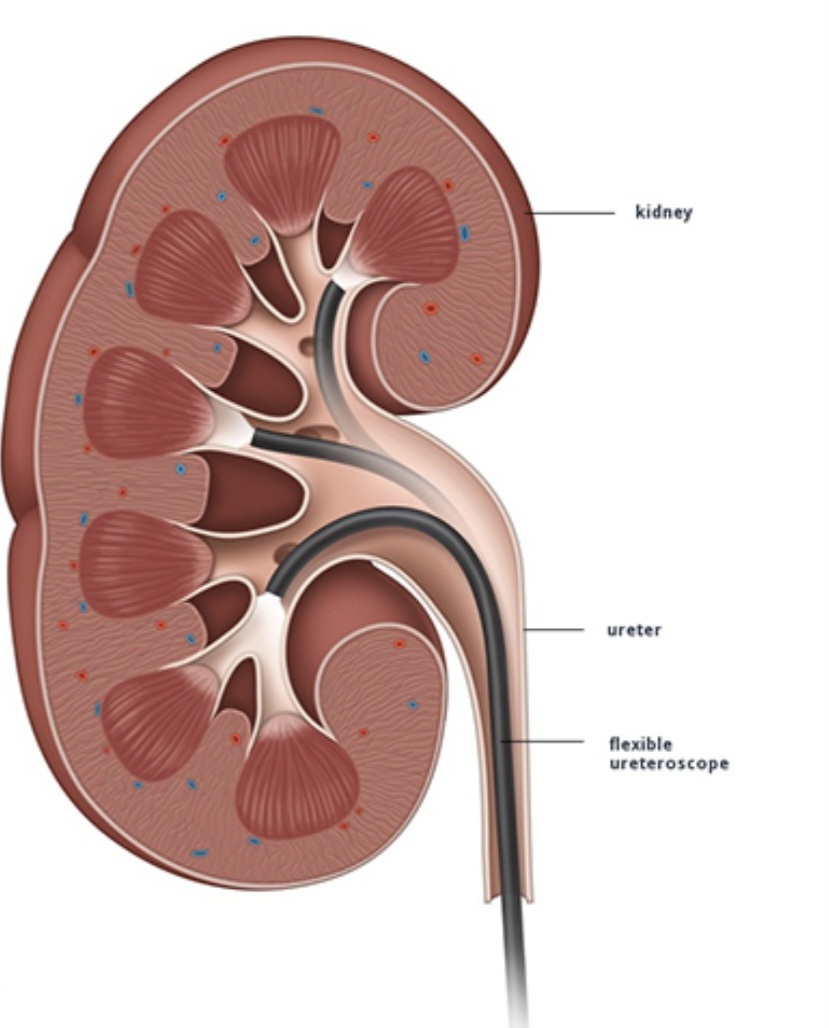
The flexible scope used in RIRS is inserted through the natural urinary passage (urethra), through the bladder, then up through the ureter to reach the kidney — with no surgical incision anywhere on the body. This is what distinguishes RIRS from PCNL, which requires a small puncture in the back.
RIRS typically takes 45–90 minutes depending on stone size and location. It is a well-established, safe procedure with a low complication rate; the most common effects are mild burning on urination or light blood in the urine for a few days, caused by the temporary JJ stent placed to drain the kidney.
Most patients return to light activity within 1–2 days, and full activity within about a week. There is no special diet immediately after the procedure beyond drinking plenty of water (2-3 litres daily) to help pass stone fragments and reduce stent irritation; a normal diet can resume gradually as soon as you feel better.
It depends on stone type. For calcium oxalate stones (the most common): reduce spinach, nuts, chocolate, and strong tea. For uric acid stones: reduce red meat, seafood, and purine-rich legumes. In all cases, reducing salt and excess animal protein, and increasing water intake, is the single most important measure. Stone-type analysis determines the precise diet that applies to you.
Have more questions? Book a consultation with Dr. Samer Morsy
💬 WhatsApp Dr. MorsySigns a stone may be about to pass include intermittent pain that moves from the flank down toward the lower abdomen or groin (renal colic), frequent urgency to urinate, and sometimes mild burning on urination. If the pain is accompanied by fever, chills, or a complete inability to urinate, these are signs that need urgent medical attention, not waiting.
Yes, an acute renal colic episode can cause nausea and vomiting due to the intensity of the pain and shared nerve pathways between the kidneys and digestive system. As for size: stones under 4mm are generally not dangerous and pass on their own, while stones over 6mm or those that fully block urine flow are more concerning because of their potential to affect kidney function if left untreated for a long time.
Ready to take the next step? Book your appointment today
📅 Book Appointment